
How Lenormand Works
Understanding Lenormand
How Lenormand Works
36 simple pictures – a house, a ship, a letter. How can such a small deck say something about your life? A look at where the Lenormand cards come from and how they speak.
Where the cards come from
The cards go back to the «Game of Hope», a dice and card game published in Nuremberg around 1799. They got their name later, after Marie-Anne Lenormand (1772–1843), the most famous card reader in Paris. Whether she ever used these cards herself is not documented – but her name stood for foresight, and it stayed.
A language of 36 words
Each card shows a picture from everyday life: house, path, letter, key. Because you know these pictures, you recognise them quickly – in your thoughts and in what you encounter. Like words, they only form a sentence together. That is why Lenormand is read in pairs and rows: the first card names the topic, the second gives it its colour.
Clear and concrete – and still a mirror
Lenormand speaks more directly than tarot. It shows what is happening rather than how it feels inside. At Conradius the cards still remain a mirror: they show possibilities, forces and tendencies. What you make of them is up to you.
What comes your way joins the conversation
As with tarot, the card you draw is what comes your way in this moment. Your inner self has known your question for a long time. Lenormand gives it simple pictures that you may find quite literally in the evening – a letter, a path, a house.
Bridges to tarot
Many Lenormand pictures have a sister in the tarot. If you know both decks, you see the same force from two angles:
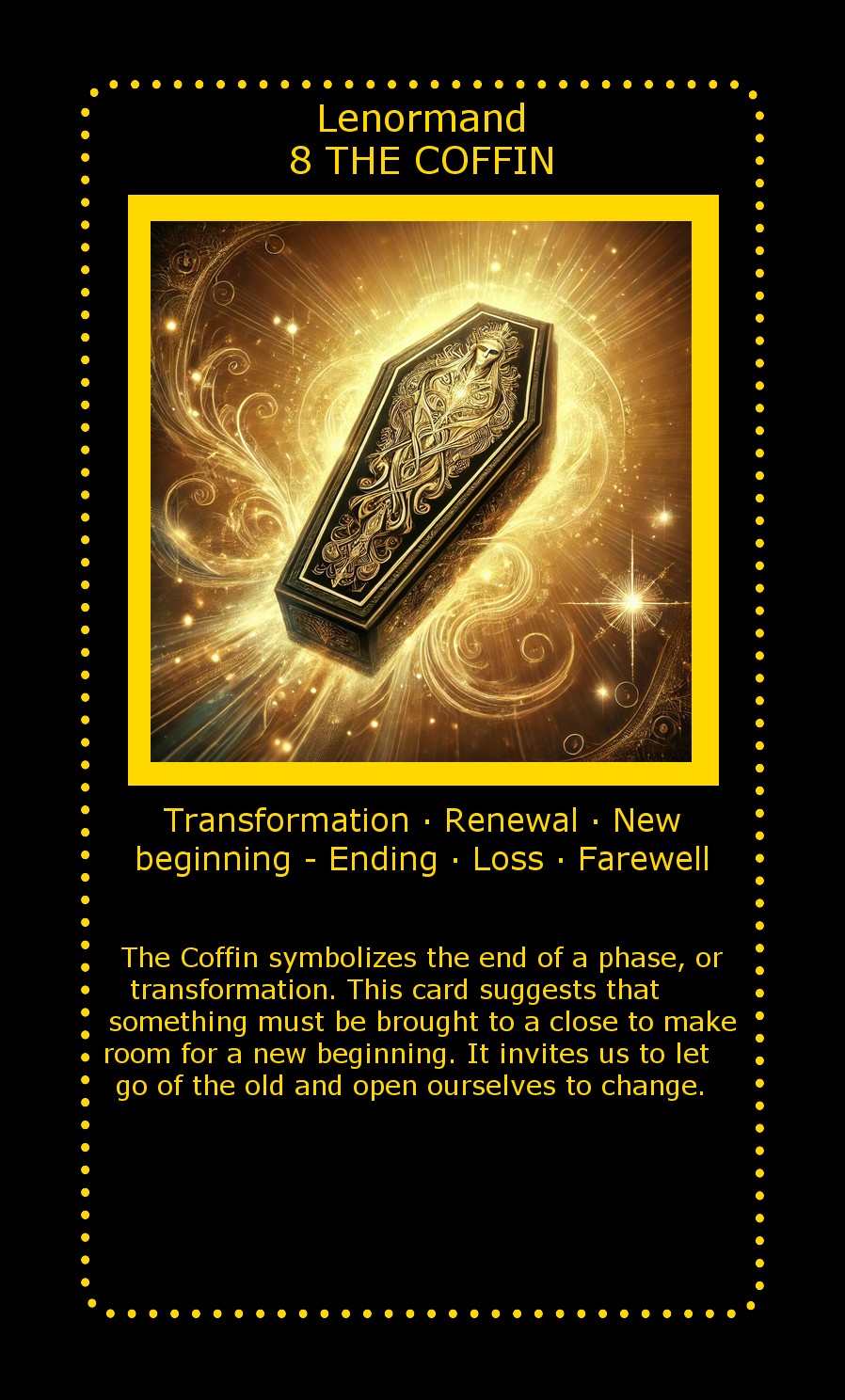 The Coffin↔
 Death
Death carries the same ending: something has been fulfilled, may go, and makes room for the new.
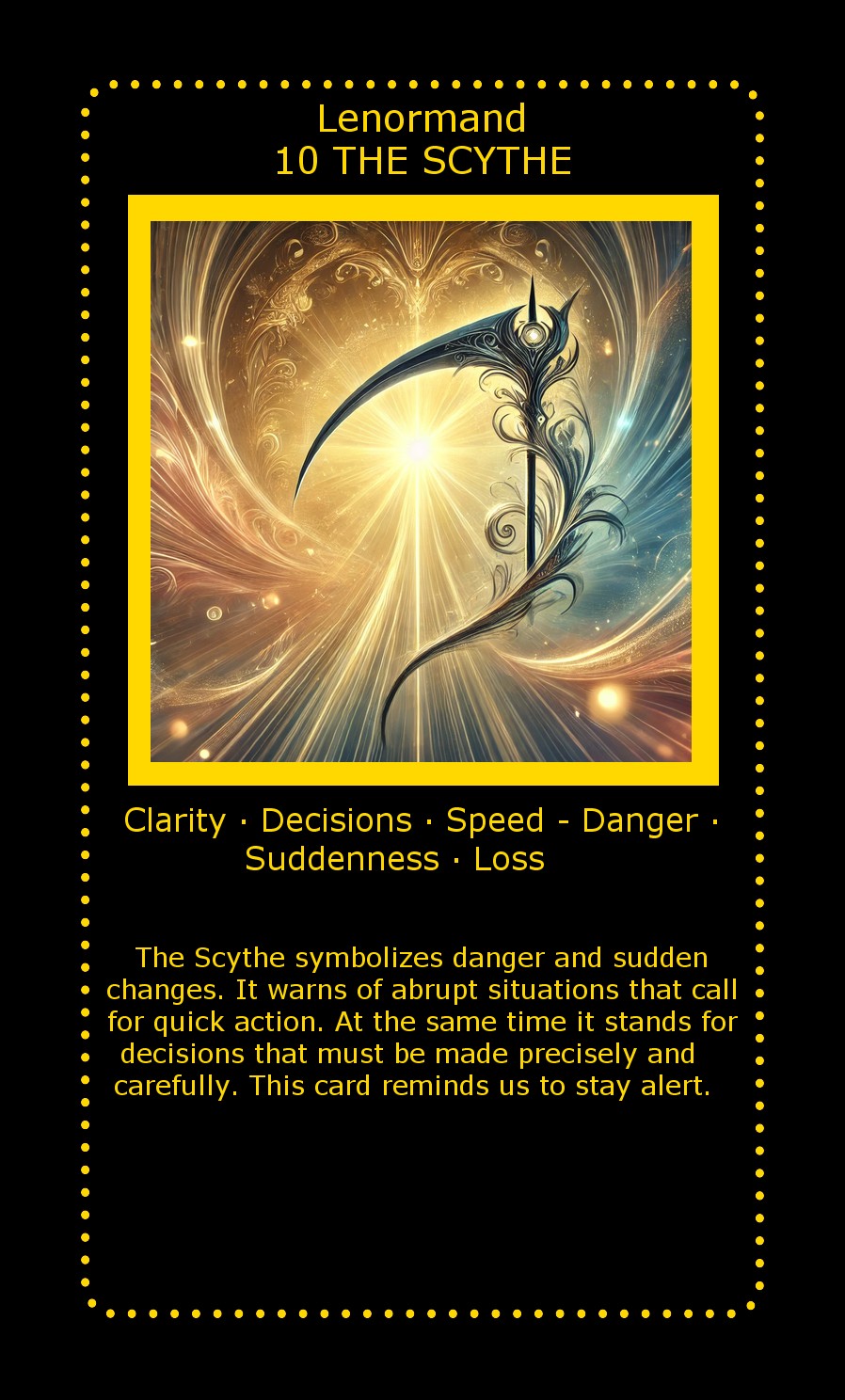 The Scythe↔
 The Tower
 shows the same sudden break: a lightning bolt that frightens and frees.
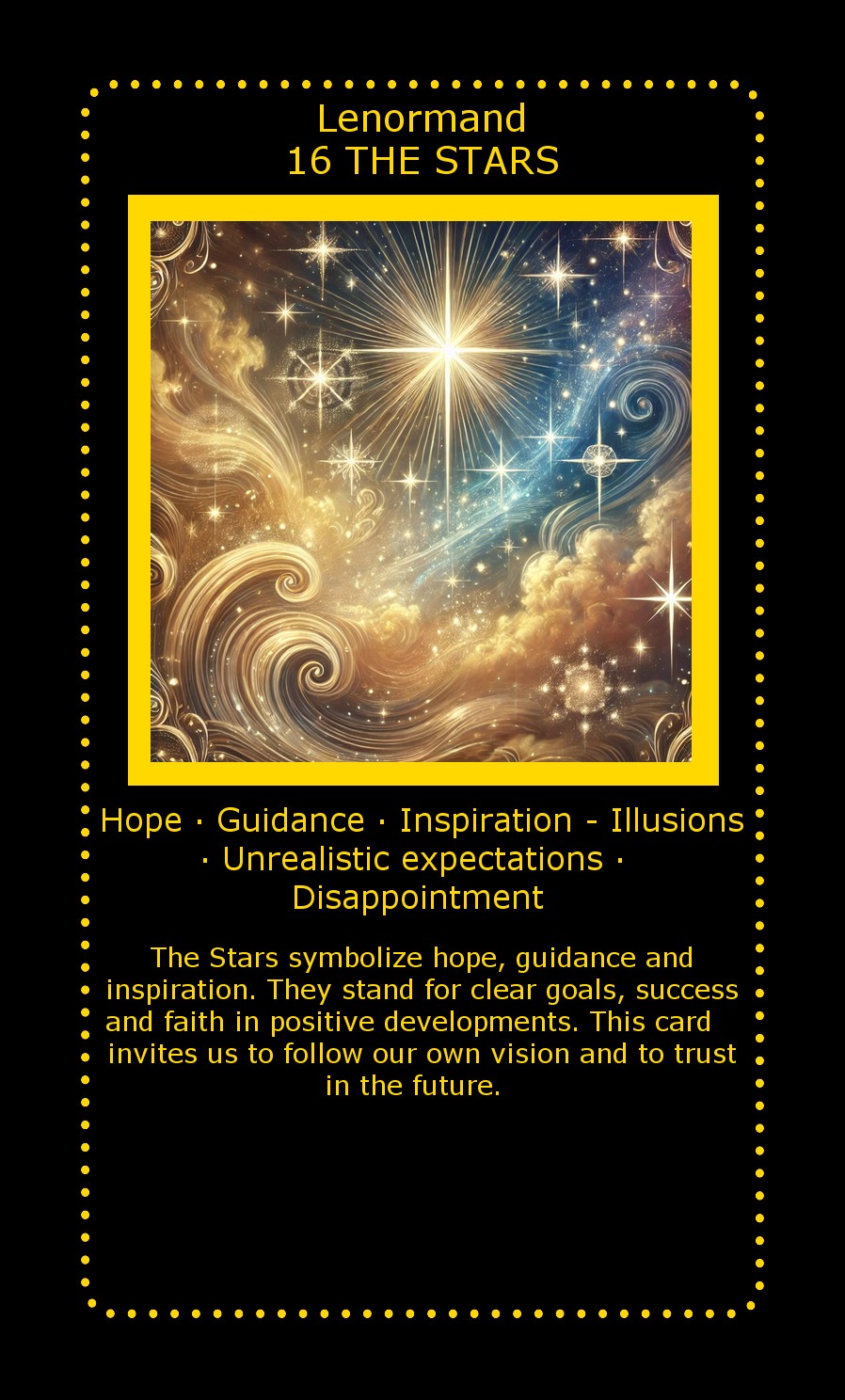

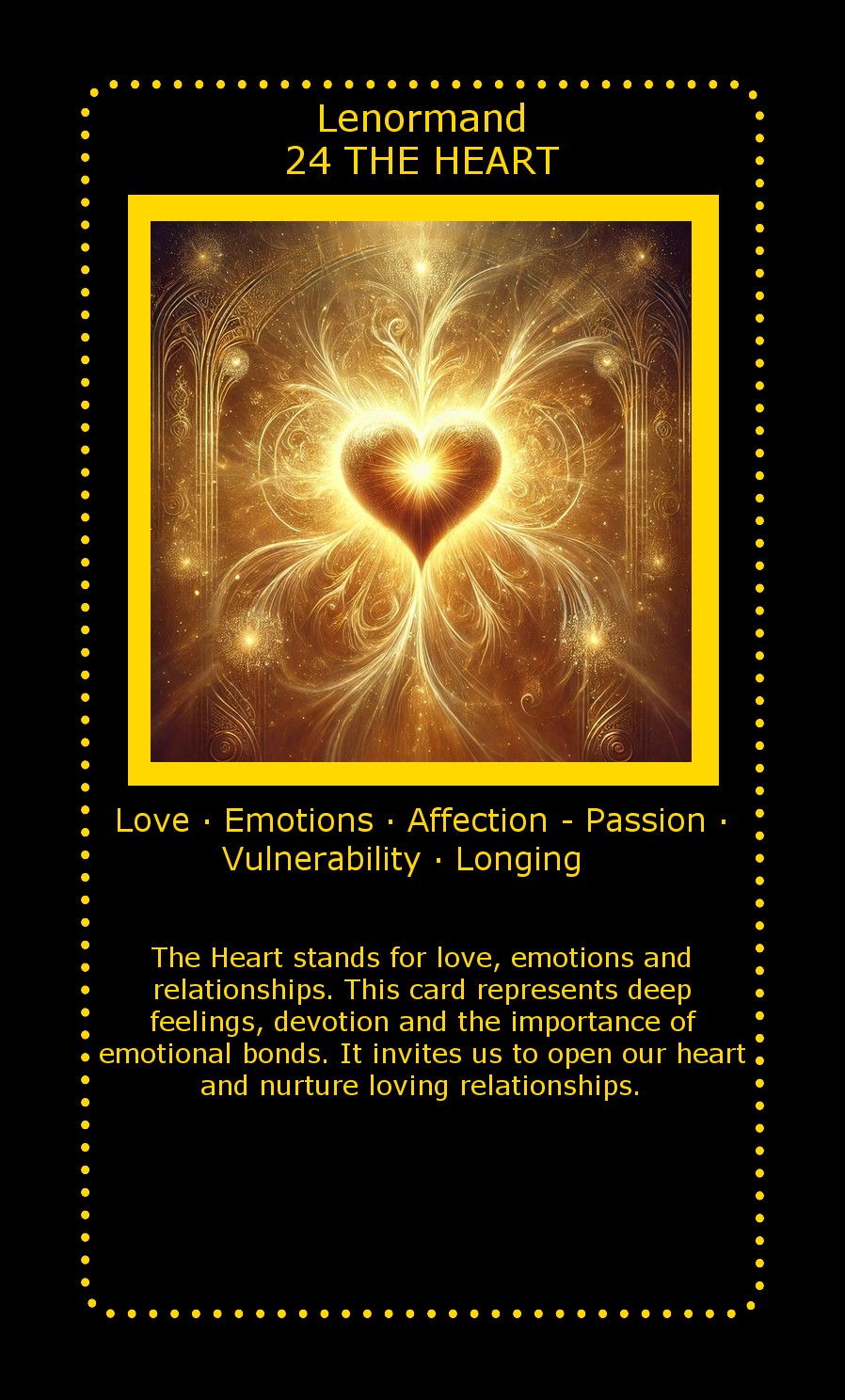 The Heart↔
 Two of Cups
The Two of Cups shows the same heartfelt bond: two people meet and offer each other the cup.
© Copyright 2026, All rights reserved

My account
My account
Ask Conradius
- Talk with ConradiusShare what’s on your mind
- Spirit ChatInner questions: what’s holding me back?
- Love OracleMatters of the heart: love and relationships
In the chat, Cai, the light of Conradius, answers you.
Cards
Learn to read the cards
- OverviewAll learning paths at a glance
- Learn to readStep by stepTarot · Lenormand · Starlight
- PractiseWith Cai at the practice tableTarot · Lenormand · Starlight
- How the cards workWhy the cards mirror youTarot · Lenormand · Starlight
- Tarot and astrologyYour zodiac sign and its card
- FAQAll about card reading
Horoscope
About Conradius
ImprintPrivacy policyTerms and conditionsCancellationDelivery termsCookies